

Notary Services
Who Can Notarize a Document in the UAE?
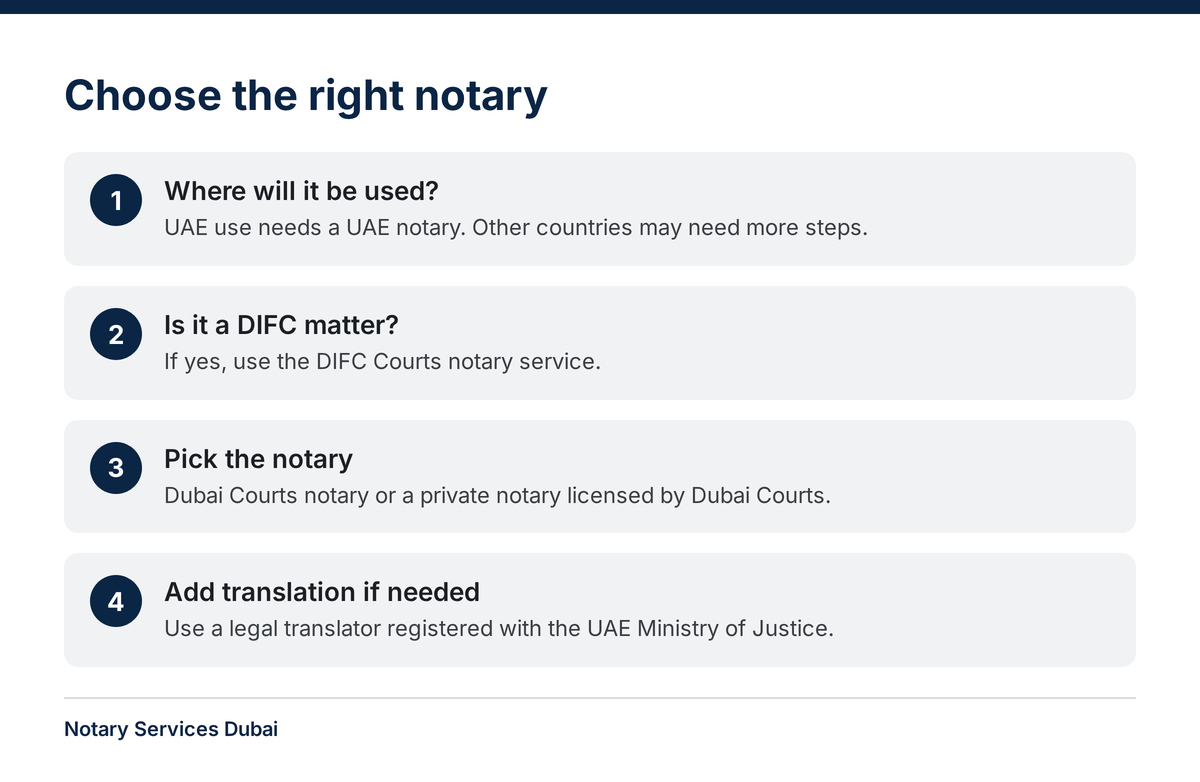
Who can notarize a document in the UAE? A notary public can: either the government notary public at Dubai Courts or a private notary, who is a lawyer licensed by Dubai Courts. DIFC matters go to the DIFC Courts notary service. Most people lose time by starting with the wrong office, so check which one fits your document first.
The rest of this page helps you choose. If you already know your document, you can call or WhatsApp us and we will tell you the next step.
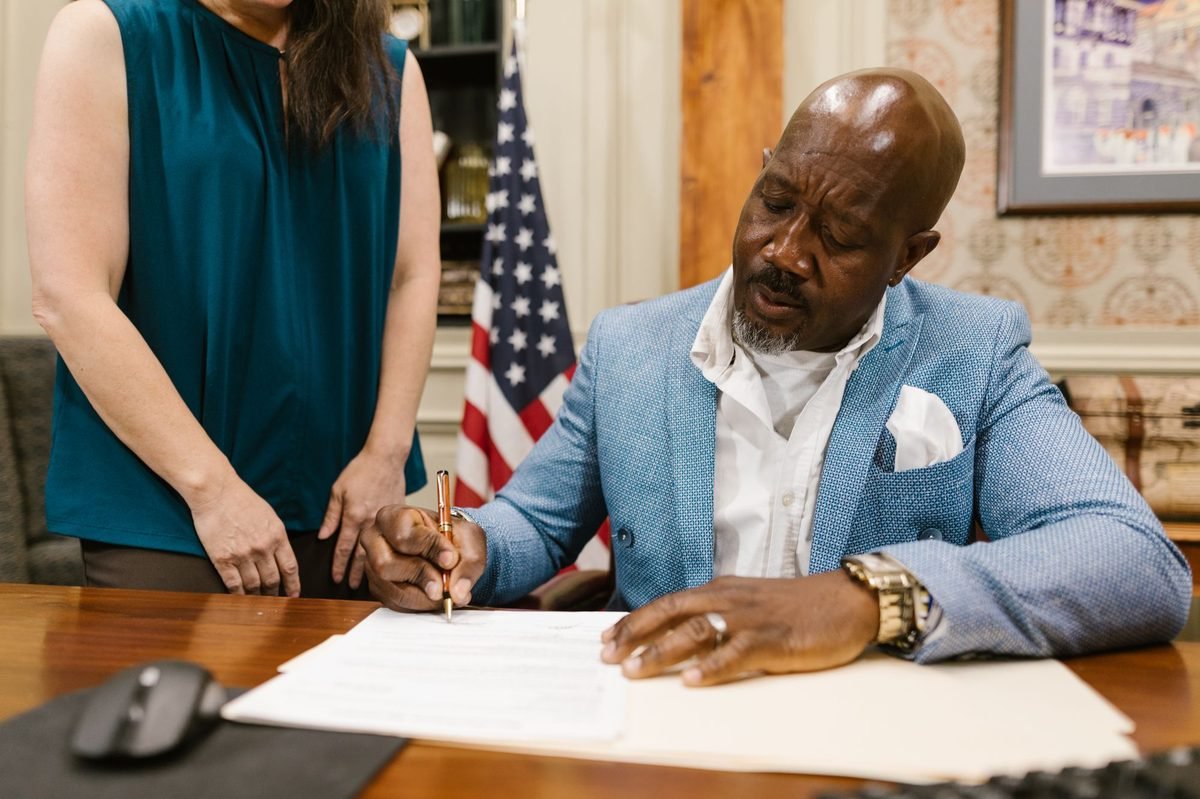
Who can notarize a document in the UAE
Notarial acts in the UAE are regulated by Federal Decree-Law No. 20 of 2022 on the regulation of the notary profession. In Dubai, notaries public are also regulated by Dubai Law No. 4 of 2013.
This means a stamp from just anyone is not a notarisation. The person must hold the notary role under that law. A friend, a colleague or a company manager cannot do it, even if they sign as a witness.
Government notaries, private notaries and DIFC Courts
Dubai has two kinds of notary public. Each has a clear role.
- Government notary public (Dubai Courts). This is the public notary service run by Dubai Courts.
- Private notary. A private notary in Dubai is a lawyer licensed by Dubai Courts to carry out notarial acts. Private notaries are on a roll kept by Dubai Courts.
- DIFC Courts notary service. DIFC Courts runs its own notary service for DIFC matters. If your document belongs to a DIFC company or a DIFC matter, go there.
Our page on public vs private notary compares the two in more detail. Our guide to private notary services in Dubai explains how the private route works.
Remote notarisation
The UAE Ministry of Justice runs the E-Notary System for remote notarisation. It is a government system. If you cannot attend in person, read our guide to e-notary in Dubai.
Talk to us
Tell us what the document is and where it will be used, and we will tell you the next step.
Embassies and consulates for their own nationals
Some documents are not for use in the UAE at all. If your document is going to your home country, your embassy or consulate may be the office that must stamp it. Ask them what they accept before you pay for anything else.
Documents from abroad follow a different path. The UAE is not a party to the Hague Apostille Convention. A foreign document is attested in the issuing country, including at the UAE embassy there. Then MOFAIC attests it in the UAE. Our page on the Dubai consulate attestation process shows which consulate fits which case.
Banks, typing centres and lawyers: where they fit
These are often mixed up with a notary. They are not the same.
- Banks accept or ask for notarised papers. They do not notarise them for you.
- Typing centres prepare and type documents. The notarial act is done by a notary.
- Lawyers can notarise only when they hold a private notary licence from Dubai Courts. A lawyer without that licence can advise you and draft the document, but the notary signs it.
For witnessing a signature specifically, see who can do it in Dubai.
Choosing the right notary for your document
Ask three questions.
- Where will the document be used? In the UAE, a UAE notary. In another country, check whether the receiving side wants more steps after the notary.
- Is it a DIFC matter? If yes, use the DIFC Courts notary service.
- Is it in English or Arabic? A translation for official use must be done by a legal translator registered with the UAE Ministry of Justice.
Federal notary fees are set by Cabinet Resolution No. 19 of 2024. For example, authenticating signatures on an instrument of unspecified value is AED 200 per party. A private notary may add up to 30% as professional fees. Translation, MOFAIC attestation and embassy fees are separate. We confirm our fee when you send the document. Our page on notary public fees in Dubai has the wider picture.
How we help
We offer in-house notary public services at our Business Bay office, and a notary public in person, online or at your home. Our in-house notary public handles your notarisation, and we prepare, draft and translate the document if it needs it. Our guide to how to notarise a document in Dubai lists the steps and what to bring.
FAQ
Frequently asked questions
Who can notarize a document near me?
A notary public can, and in Dubai that means a Dubai Courts notary or a private notary. Our office is in Business Bay, and we also offer online and home visit notary services. See notary public near me in Dubai.
Who can certify documents in Dubai?
It depends on what “certify” means for your document. A notary notarises, MOFAIC attests, and a certified true copy has its own route. Tell us the document and where it will be used, and we will say which applies.
Can a lawyer notarize a document in the UAE?
Only a lawyer who is licensed by Dubai Courts as a private notary can. A lawyer without that licence can advise and draft, but cannot carry out the notarial act.
Can my embassy notarize a document in Dubai?
Your embassy may stamp documents for use in your own country. Contact them to ask what they accept. For documents used in the UAE, you need a UAE notary.
Who can notarize a travel consent letter?
A notary public can notarise the signature on a travel consent letter. The airline or border authority decides what it accepts, so check with them first. Send us the letter and we will confirm our fee.
More answers, grouped by topic, are on our questions and answers page.
Keep reading
Related guides and services



More pages you may need
Get started
Talk to us about your document
Call or WhatsApp +971 54 380 1094, or email support@notaryservicesdubai.com. Tell us what the document is and where it will be used, and we will tell you the next step. Office open Monday to Friday, 9:00 am to 6:00 pm. WhatsApp and online requests answered 24/7. You can also contact us here.